
WATER-WISE
The water crisis is the defining issue of our time, and researchers are examining ways Colorado agriculture can consume less while continuing to thrive
By Jayme DeLoss | Photography by Brett Schreiber | Oct. 19, 2026
Brittle plants crunched underfoot as researcher Perry Cabot walked through a sad-looking alfalfa and grass field overrun with weeds. One field over, on the other side of a dusty road, crops were green and thriving under the intense summer sun.
The difference is critical to producing the most valuable crops in Colorado: irrigation.
Though it looked like a farmer’s nightmare, there’s a good reason this field was stressed. It’s part of a Colorado State University deficit irrigation study in the Colorado River Basin. Cabot is trying to understand the economic impact of water leasing on Western Slope cattle grazing operations and is gauging how much water could be conserved by shutting off irrigation at different points during the growing season.
Decades-long drought and a record-low snowpack have reduced the Colorado River to an all-time low, triggering a water crisis for the roughly 40 million people who rely on it and making Cabot’s work more relevant than ever.

Perry Cabot, a CSU Extension regional water specialist with the Colorado Water Center, surveys research fields at the Western Colorado Research Center – Grand Valley, which is in Fruita.
On the other side of the state, a less visible, less publicized declining water supply threatens crop production on Colorado’s Eastern Plains. Some of the state’s most agriculturally productive counties rely on groundwater from the Ogallala Aquifer. The aquifer has been pumped for irrigation faster than nature can replenish it, leading to declines of up to 150 feet in some areas beneath the High Plains.
For more than two decades, Joel Schneekloth’s work on farms and at the U.S. Central Great Plains Research Station in Akron, Colorado, has helped extend the productivity of the Ogallala Aquifer.
Cabot and Schneekloth are Extension regional water specialists with the Colorado Water Center at CSU, and both are exploring ways to reduce agricultural water use while keeping agriculture viable from the state’s mountains to its Plains. Because agriculture is the dominant water consumer in the state – using 85 percent of available water – the industry faces pressure to use less from both the environment and from growing communities.
Colorado water law mandates that water rights holders must put this essential resource to beneficial use for the public good, and what could be more beneficial than producing food, clothing, and fuel? At the same time, debates over reductions in water use invariably raise questions about whether and how farms and ranches can curb consumption while continuing to produce food for the state, nation, and world.
“We need to have food to survive, and we need the agricultural sector in our state to survive,” Cabot said, noting that farmers and ranchers steward the land, and agriculture sustains communities. In Colorado, agriculture is a crucial economic driver, tallying $47 billion in annual economic activity; top agricultural commodities are cattle, dairy, corn, hay, and wheat.

“We're trying to provide answers and solutions and pathways for people to navigate what is almost certainly going to be a drier future.”
— Perry Cabot, CSU Extension regional water specialist
Cabot called the water crisis the defining issue of our time, and his work at CSU’s Western Colorado Research Center in the Grand Valley is addressing it through three approaches: irrigation technology and efficiency, alternative crops, and consumptive use evaluation, or measuring precisely how much water crops need to be productive. “We’re trying to provide answers and solutions and pathways for people to navigate what is almost certainly going to be a drier future,” Cabot said.
For years, fifth-generation cattle rancher Paul Bruchez has worked with Cabot and others to evaluate water-conservation measures. In 2020, Bruchez, Cabot, and other producers began a four-year conserved consumptive use study to assess the impacts of drying out pasture for a year and the amount of water conserved. The project calculated how much water was used by pasture plants, or consumptive use, and the reduction in consumptive use by restricting irrigation, or conserved consumptive use. It found a significant reduction in water use in pastures that were unirrigated or shut off early, which led to a reduction in forage yield that extended beyond the year of restricted irrigation. In fact, it took three years for the pastures to recover, which had long-term financial impacts for producers. Conservation program incentive payments helped to offset the cost of lost yield for producers growing crops to sell, but producers growing crops to feed their own livestock had the additional financial strain of buying hay to make up for reduced forage.
The study, funded by the Colorado Water Conservation Board, the Colorado River District, The Nature Conservancy, American Rivers, and Trout Unlimited, gave ranchers and conservation program managers a fuller picture of how much a conserved acre-foot of water is worth and demonstrated the long-term impacts of water leasing.
It also led to Cabot’s current deficit irrigation project on ranchland owned by Western States Ranches and funded by Conscience Bay Research, a Colorado philanthropic organization focused on building resilience in western agriculture. The new project will give producers data on water-leasing options tied to various irrigation shutoff dates, so they’ll better understand how much water they can lease to other users while maintaining long-term production.


At the Western Colorado Research Center – Grand Valley, Perry Cabot is studying peas as a high-protein forage option that uses less water than alfalfa (at right).
At the Western Colorado Research Center – Grand Valley, Perry Cabot is studying peas as a high-protein forage option that uses less water than alfalfa (bottom).
Bruchez said Cabot did not have to sell him on the conserved consumptive use project. Working with Cabot and CSU to study agricultural water management was a natural outgrowth of the Bruchez family’s efforts to adapt to limited water availability and maintain the health and resiliency of the Colorado River, which they also rely on for their fishing business.
“Rather than being an emergency and having to learn on the negative side of it, my community of ag producers in the headwaters of the Colorado River would rather do projects and understand this on a scientific basis, so if these things become critical, we can participate in water savings, and we can teach ourselves how to be more drought resilient and ready for a drier future,” Bruchez said. “Data can be our best friend if we use it correctly and understand it appropriately, and that’s what we did.”
For Bruchez and the other participating producers, their livelihood is riding on the results of studies like this and the limited supply of water, which Bruchez called historically bad this year. “There are places here that have very senior water rights, and the creeks, the tributaries just didn’t have water supply to use to irrigate,” he said. “Agriculture typically lives on a pretty tight budget to begin with, and when half of your production or greater is cut off, you can imagine what that looks like for the books.”
The Colorado River originates in Grand County, and more water is diverted out of the county than any other in Colorado; four major tunnel systems export up to 350,000 acre-feet from the Colorado River to the Front Range every year.
As a result, Bruchez said, Grand County producers are very knowledgeable about water, and they have been working for more than 20 years – since the first drought following the buildout of the last interbasin diversion project – to enhance their irrigation infrastructure and adapt to limited water availability. “It feels locally like drought impacts hit us a little bit harder,” due to the massive amount of water exported from the county, he said.

Cabot describes research projects to students in a class called Exploring Colorado Agricultural Systems.
About 75 percent of irrigated farmland in the upper Colorado River Basin is used to produce alfalfa and other forage crops – in part to support Colorado’s $5 billion livestock industry, the state’s leading agricultural sector. Alfalfa is a profitable, high-quality, high-yield feed, and agricultural infrastructure on the Western Slope is designed for it, from the equipment to the markets. But it’s a thirsty crop.
Bruchez and Cabot, with support from several nonprofit partners, are testing forage options to keep more water in the Colorado River. Their experiments with sainfoin, a low-water, nutritionally dense, perennial legume, have been especially encouraging.
While sainfoin cannot be cut three or four times in a season like alfalfa, it can be grown earlier in the season, harvested at least twice, and then possibly grazed, allowing farmers to finish irrigating before alfalfa would hit its peak consumptive use in June. Sainfoin could be especially ideal for farmers facing midsummer diversion restrictions, and it wouldn’t require them to overhaul their operations.
Cabot cautioned that sainfoin is not a “unicorn crop” to replace alfalfa, but “if you can plant and cut alfalfa, you can grow sainfoin as well.” Best of all, cattle love it, he added.

Bruchez initially planted sainfoin for this reason – livestock and wildlife both like to eat sainfoin, and it has a hollow stem and lower lignin content, preventing bloat. He had a hard time getting it established and later learned that was because he had given it too much water.
In mid-June last summer, Bruchez said his second sainfoin crop of the season wasn’t fully mature, but he was anticipating it would yield about 5 tons per acre combined with the first cutting – an amount on par with his seasonal alfalfa yield – while saving a third of his water supply. “The sainfoin is still thriving, and we have really shorted on water supply this year because we just don’t have the availability,” Bruchez said.
Bruchez said partnerships like the ones formed through the Colorado Basin Roundtable, with stakeholders from both sides of the Continental Divide and support from funding partners including the Colorado Water Conservation Board, the Colorado River District, The Nature Conservancy, The Land Institute, American Rivers, and Trout Unlimited, give him hope that there’s a future for agriculture at the headwaters of the Colorado River.
“The thing that gives me confidence that my children will have the same opportunities that I’ve had are the partnerships that have been formed,” Bruchez said. “We are exponentially more educated toward this conversation, largely from working with Dr. Cabot, and because we were already thinking this way, but he gave us the tools to make this work.”
He continued, “My kids already know about water savings out of principle. It’s a daily part of our conversation. That needs to become more universal. And it’s going to be challenging because a lot of people don’t like to talk about it, but I think there are solutions out there.”


Fields at the Western Colorado Research Center – Grand Valley.
It’s easy to see that the two major reservoirs supplying the southwestern United States – lakes Mead and Powell – are drying up by the “bathtub rings” left behind as Colorado River waters recede. On Colorado’s Eastern Plains, the declining water supply is more than 100 feet below the surface; it is less obvious than the receding water in the nation’s largest reservoirs – but just as serious for farmers.
In northeastern Colorado, farmers pump water from the Ogallala Aquifer to irrigate crops. The aquifer has been shrinking since post-World War II agricultural expansion when “we really cranked up the irrigation,” said Schneekloth, who recently retired after working for more than 35 years to preserve the aquifer and sustain the agriculture that relies on it.
He grew up farming in Nebraska on the far eastern edge of the aquifer, then studied irrigation at the University of Nebraska before working on limited-water management at the U.S. Central Great Plains Research Station for the past 26 years.
“My kids already know about water savings out of principle. It's a daily part of our conversation.”
— Paul Bruchez, Western Colorado rancher
Schneekloth has spent decades getting farmers and policymakers used to the idea of living with less water, and they’re starting to come around, he said. He has encountered resistance to some of his data and proposed water-saving measures over the years, but he said producers and policymakers value research and understand something needs to be done about the declining water supply. “The world is going to be living with less fresh water, whether it’s because of the climate or municipalities or declining water supplies, like the Ogallala,” Schneekloth said. “We’ve got to figure out ways to make that last longer from an economic standpoint and a community standpoint.”
Agriculture is the economic driver for eastern Colorado communities, and Schneekloth warned that they won’t survive without water, adding that Front Range cities look to agriculture for water to sustain urban growth. “When water leaves, the community dries up,” he said.
While acknowledging there is a water shortage, some producers still find his data hard to believe. Schneekloth said estimates of achieving regional sustainability with a 20 percent irrigation reduction are overly optimistic. “It will take at least a 50 percent reduction in irrigation to make it sustainable, and people don’t like that,” he said.
Schneekloth said agriculture can be sustained in eastern Colorado by limiting irrigation to when it’s most necessary, by shifting to more low-water crops, and through stricter, locally controlled allocations.

Joel Schneekloth, a recently retired CSU Extension regional water specialist, has conducted irrigation research for decades to help conserve water from the Ogallala Aquifer, which is a critical resource for Eastern Plains agriculture.
Early in Schneekloth’s career, when he was working in Nebraska, farmers understandably questioned his methods when their corn started to show signs of stress, but he was able to prove to them that limiting water and timing irrigation to when it gets the best crop response can yield as much as full irrigation.
“As one of my mentors said, it’s the management practice called ‘piddle, pour, piddle.’ Piddle the water on during the early vegetative stage, pour when it’s the reproductive time period, and piddle during the mid to late grain fill,” he said.
Even a water-loving crop like corn – the top cash crop in eastern Colorado – can be managed in a way that uses less water, Schneekloth said, cautioning that farmers will need to accept that less water in the future will mean less corn. Economically, corn is king on the Eastern Plains; the agricultural system and markets are built around it because it’s a high-quality livestock feed.
“Consumers drive what producers do,” Schneekloth said. “They want red meat? We’ll grow red meat. If that drops out of the market, we’ll figure something out, but right now, people love their beef.”

For low-water crops to gain a foothold in eastern Colorado, there must be a market for them, so farmers can cover the costs of production. Dryland crops, such as wheat, are not as valuable as corn. Schneekloth has tested rotations with corn, soybeans, and drought-tolerant crops, including winter wheat and sunflower, but the economics don’t add up for farmers compared to planting more corn.
For the past six years, he has studied black-eyed peas, a high-value bean sold for human consumption. In a two-year experiment under a rain-out shelter, which prevents precipitation from reaching the ground, Schneekloth found that black-eyed peas do well with severely limited water.
Promisingly, there’s a market for them, too, but the U.S. imports most of its supply from South America because it is cheaper than growing the crop here. However, he said, Colorado-grown black-eyed peas have something the imported beans do not: Their color is more appealing to consumers. If the U.S. market can be developed, black-eyed peas could be an economically viable option for the region.
“Let's try to find solutions today to maintain it and the economic vibrancy of this High Plains region.”
— Joel Schneekloth, CSU Extension regional water specialist
Schneekloth’s long-term research and the relationships he has built over time have converted some farmers to his irrigation management practices. He has helped farmers use water more efficiently in the Republican and South Platte basins.
Joe Newton, a CSU alumnus, farms 40 irrigated circles – about 5,000 acres – in Yuma County in eastern Colorado. Newton met Schneekloth through the Colorado Master Irrigator program when Schneekloth gave a talk on irrigation nozzle packages and placement. Newton found his results to be counterintuitive.
Schneekloth’s data showed that raising the sprinkler nozzles above the corn canopy did not cause the evaporation that was expected. In-canopy watering should theoretically be more efficient, Schneekloth said, but it doesn’t account for soil types, slopes, or how many gallons the well pumps per minute. He claimed that raising the nozzles and speeding up the application would reduce runoff.
Newton was skeptical, but he tested it on a couple pivots, and sure enough, he saw better infiltration and less runoff. He no longer had sprinkler wheel tracks, and his yields became more consistent. Now, most of the land he farms is irrigated this way. “The relationship with Joel has improved our water use efficiency and increased yields,” Newton said. “He has introduced me to new technologies and new ways to approach the problem we have out here with a depleting aquifer.”
For Schneekloth, the greatest reward is when producers adopt his science-based recommendations. And while accolades might not matter to him, Schneekloth was recently recognized by the Four States Irrigation Council with the prestigious Colorado Headgate Award for his significant contributions in irrigation, agriculture, and water infrastructure.

Some agricultural fields on the Eastern Plains rely on irrigation, while many are planted in dryland wheat.
In recent years, Schneekloth has shifted some of his focus from irrigated systems to dryland production. He has studied Kernza, a perennial grain, as a transition crop for farmers who run out of water or need to retire some of their land. By planting Kernza, a dryland farmer could get a good year of grain production before the crop exhausts soil moisture and becomes long-term forage, he found.
Schneekloth encourages farmers to make incremental changes to reduce their water use. He said producers have been more receptive in recent years, out of necessity, but economics are always a sticking point. “They understand that the water work we do is important,” he said. “It’s just whether or not they can make it work for them.”
Between the lack of snow to fill reservoirs and the hot, dry spring this year, many farmers in eastern Colorado had to reduce the acreage they planted. Those with rights to tap the Ogallala were still able to get their share, but the aquifer won’t last forever, especially not at the rate it’s being pumped.
“We don’t want to draw it down and pay the price later,” Schneekloth said. “Let’s try to find solutions today to maintain it and the economic vibrancy of this High Plains region.”
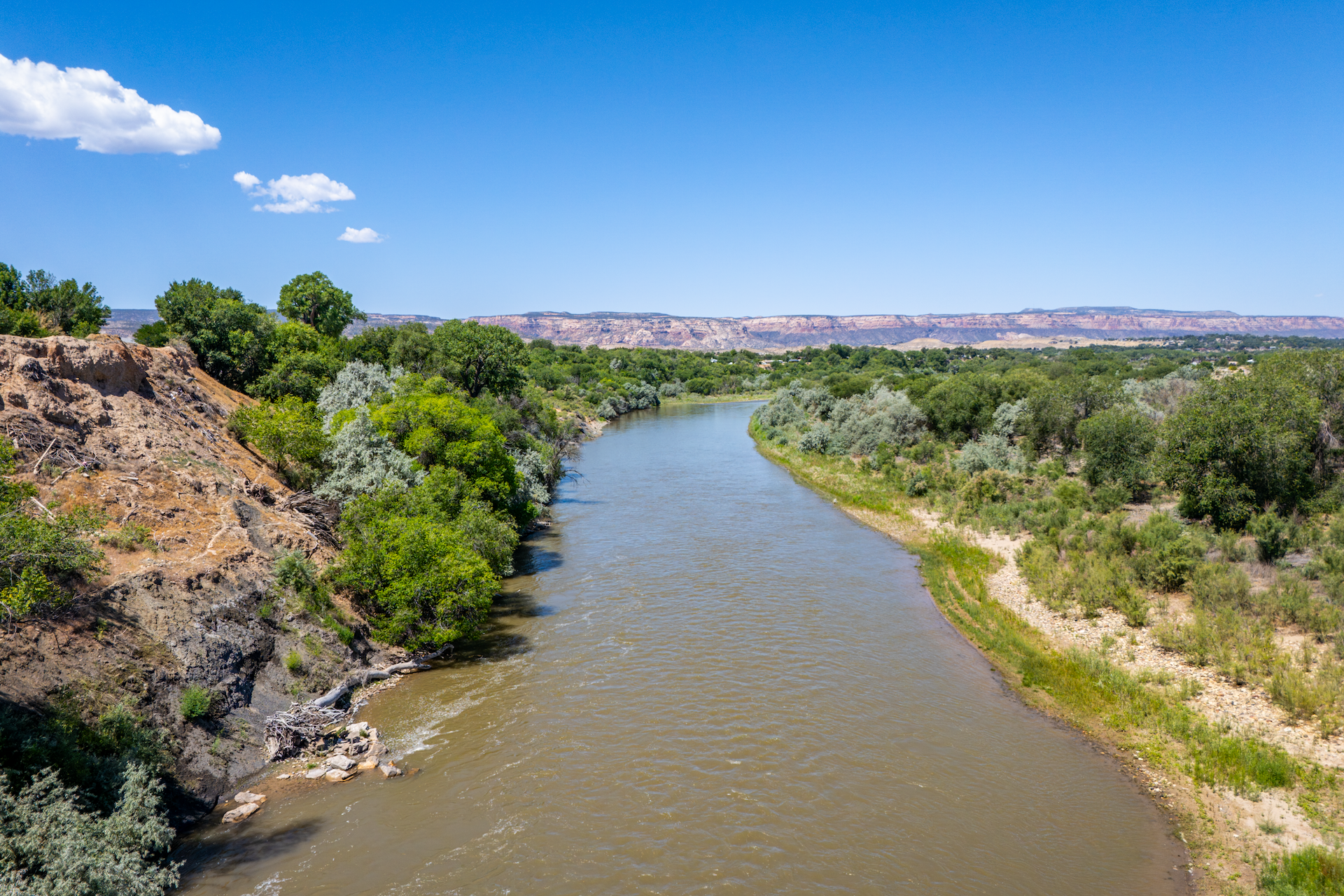
Photo at top: The Colorado River begins in the mountains of Grand County and is the lifeblood of the state’s Western Slope – and many other regions in the Western United States.
SHARE