
UNEARTHING THE PAST
Archeology Field School offers a unique look at early life
By Stacy Nick | Photography by Matthew Staver | Oct. 19, 2026
Casandro Camarillo spent the summer digging holes, sifting through dirt, and carefully brushing away layers of soil from cutbanks, the steep earthen walls formed in eroded river bends. One day, Camarillo craned to look along a cutbank and, on unstable footing, fell to the ground. That’s when he looked up and spotted a faint line of ash in the sedimentary layers – something that might not register to an untrained eye but could be a significant glimpse into the past.
“I think it’s possibly the site of a hearth,” he said. That was Camarillo’s conclusion after learning to identify the subtle signs of an ancient firepit: a charcoal mark in the soil underlain by an oxidized rim – a red layer that indicates consistent extreme heat.
He placed a small pink flag on the spot to mark it for further investigation; trace amounts of earth would be tested in a laboratory to determine whether Camarillo’s theory was accurate.
“When you’re out in the field, there’s definitely a unique feeling,” he said. “It’s exciting to think you’ve found something, but you have to calm down and really think about what exactly it is you’re looking at and what it can tell us about this area and the people who lived here.”
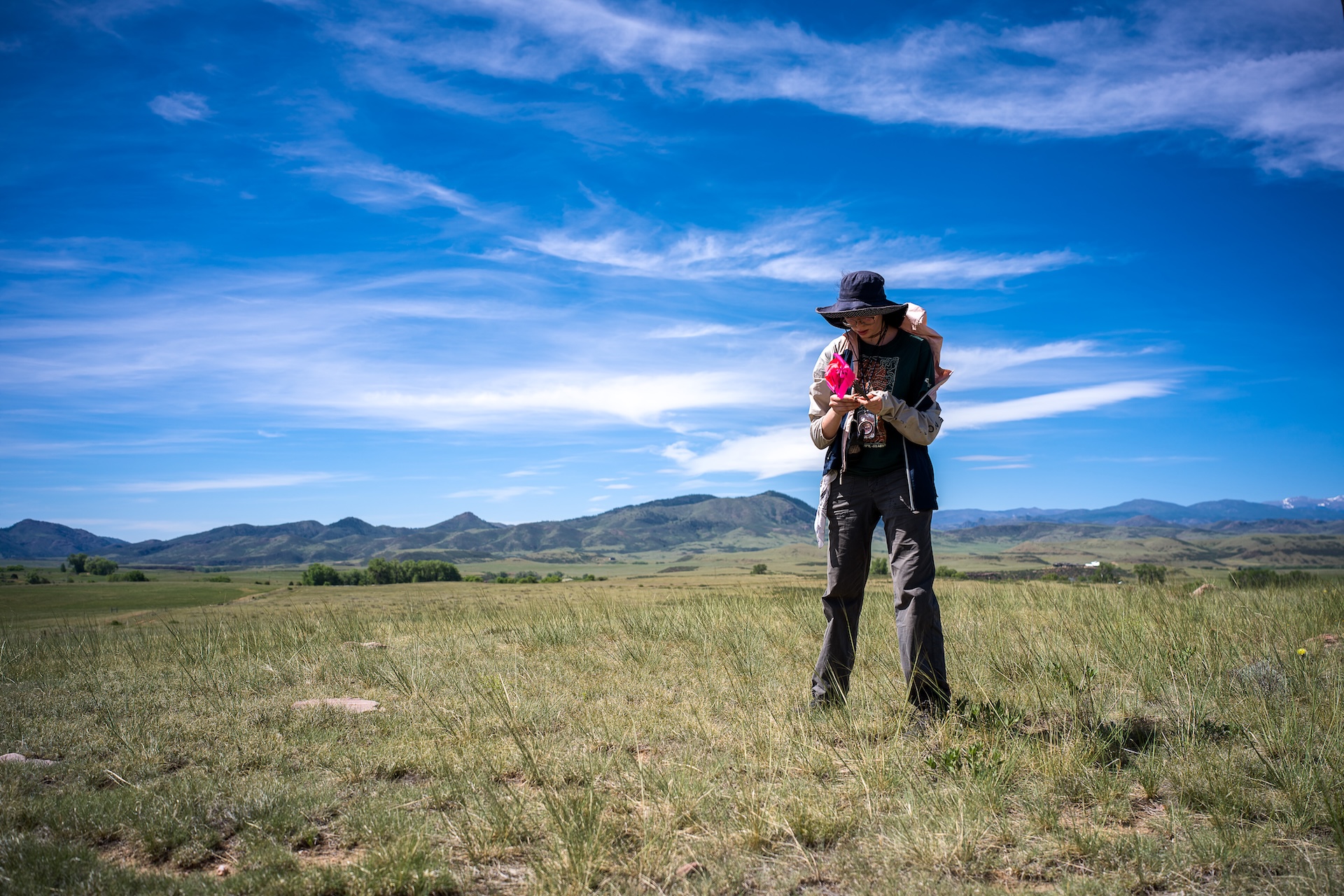
Student Hailey Conmay examines an artifact discovered during an archaeological survey.
Last summer, Camarillo was among 13 undergraduate students to learn the foundational scientific methods of archaeology, including surveying and excavation skills. These skills allowed the students to search for artifacts revealing the ancient and historic peoples who once lived in the region now known as Colorado. Their studies, aided by graduate students, were part of Colorado State University’s Archaeology Field School, a seven-week annual summertime experience that began in 1969 and is run by the Department of Anthropology and Geography. Over nearly six decades, the field school has trained hundreds of students in practices central to unearthing the past.
Since 2009, the school has been led by Jason LaBelle, a professor of anthropology who is internationally regarded for his knowledge of hunter-gatherers who peopled the interface of regional mountains and Plains in ancient times. This includes the Paleoindian period, which encompassed the Clovis and Folsom cultures at the end of the last Ice Age, some 13,000 years ago. These nomadic hunter-gatherers, named for sites discovered in New Mexico, followed migrating herds of Ice Age megafauna in North America – mammoths and mastodons in the case of Clovis people and giant bison in the case of Folsom people. They hunted with distinctive fluted stone spear points.
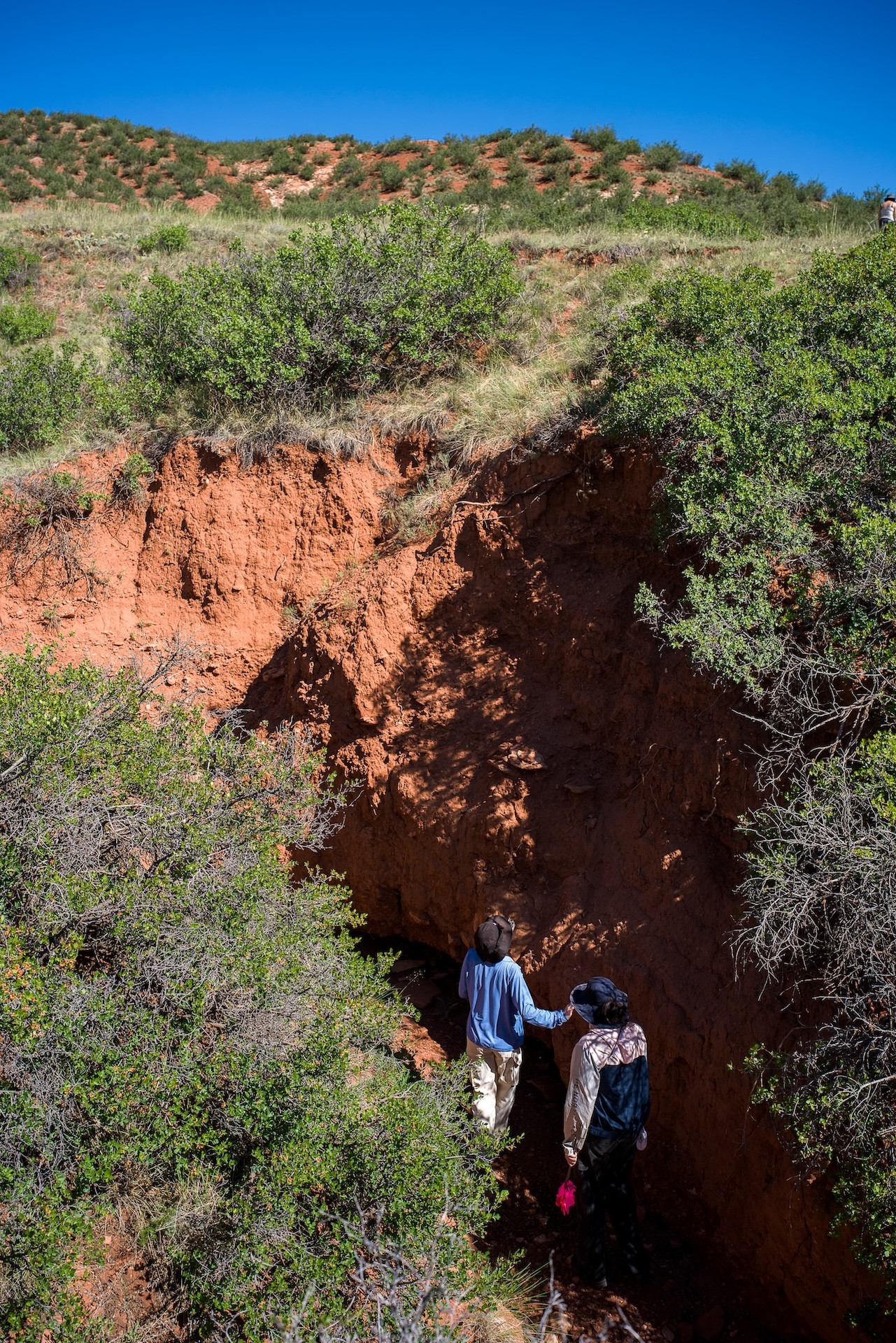
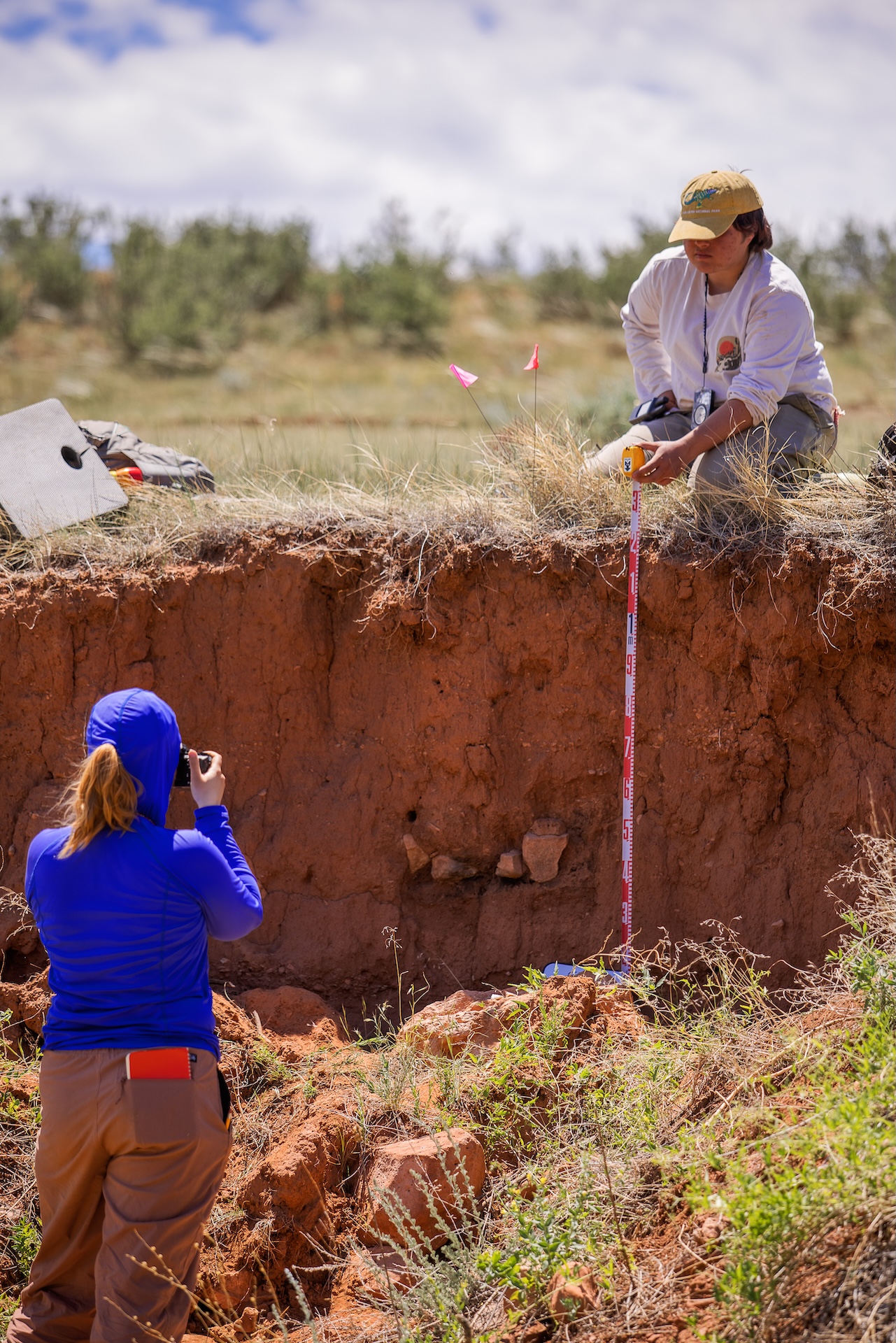
Left: Hailey Conmay and Jayda May examine an arroyo for signs of buried artifacts. Right: Joelle Dahlke and Casandro Camarillo photograph a buried hearth.
Top: Hailey Conmay and Jayda May examine an arroyo for signs of buried artifacts. Bottom: Joelle Dahlke and Casandro Camarillo photograph a buried hearth.
To LaBelle, archaeology is not about treasure hunting, though amazing treasures may be discovered through its meticulous practices. Rather, archaeology’s value is in uncovering artifacts and other remains that create the context needed to understand peoples of the past. “It isn’t about spectacular artifacts, but more so, the story that they can tell when coupled with the site overall. It is the bigger picture,” he said.
LaBelle is particularly well-versed in the Lindenmeier Archaeological Site, a world-famous site at Soapstone Prairie Natural Area, 25 miles north of Fort Collins. For 15 years, he conducted archaeological survey and monitoring work at Lindenmeier and across much of the natural area and adjacent Red Mountain Open Space.
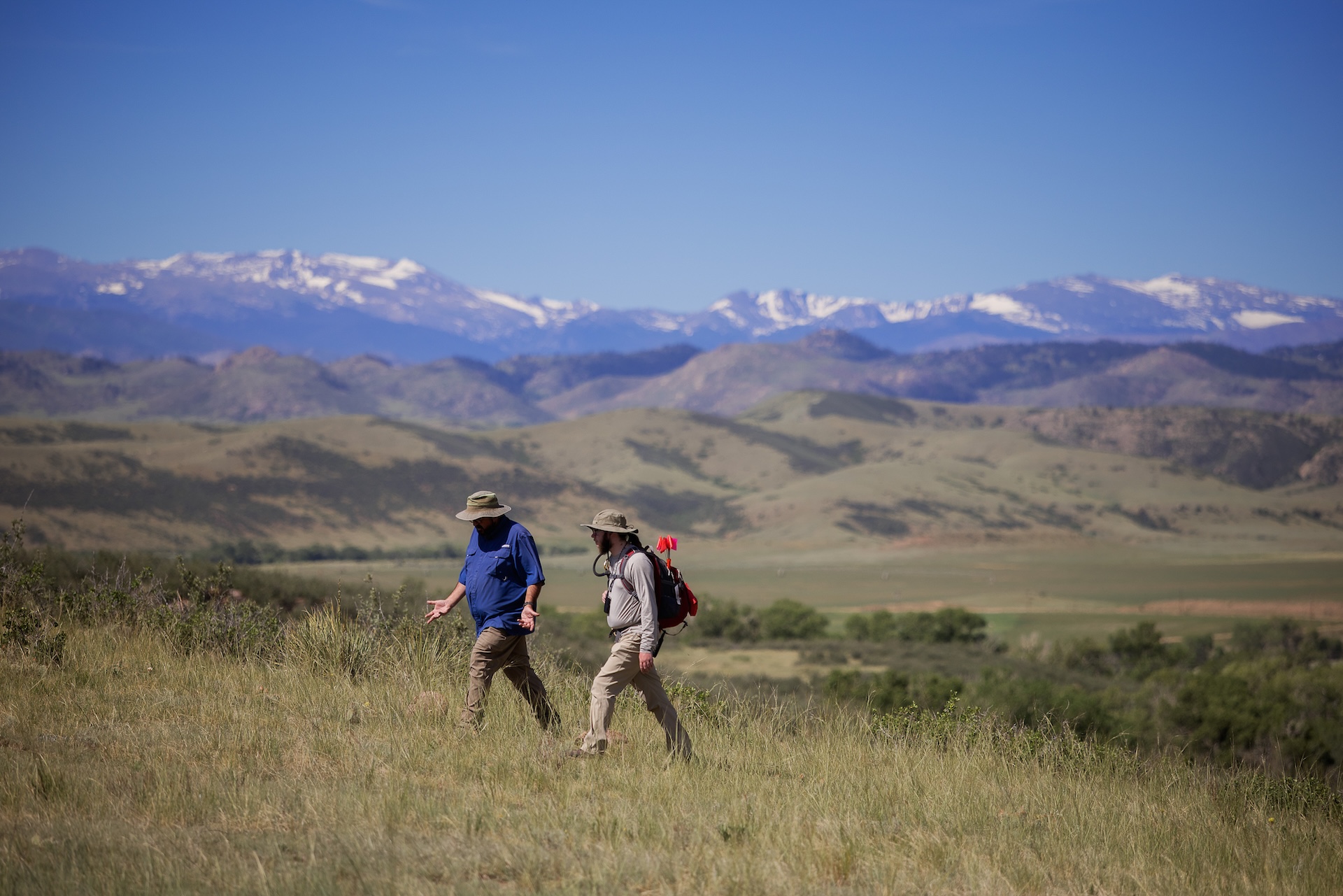
Professor Jason LaBelle and anthropology student Ian Freeland hike across an archaeology site in Northern Colorado.
The Lindenmeier site, named for the ranch family that once owned the land, turned the scientific community on its head when crews with the Smithsonian Institution began excavating there in the 1930s, according to History Colorado. In 1935, a Smithsonian crew member discovered a fluted Folsom spear point lodged in the buried vertebrae of an Ice Age bison. The extraordinary finding proved that man had lived and hunted in North America during the Ice Age, more than 11,000 years ago.
“This put to rest once and for all the theory that people had come to the Americas only a few thousand years prior to the Europeans’ arrival, proving that humans had lived on this continent for a very long time,” according to The Excavation of Lindenmeier: A Folsom Site Uncovered 1934- 1940, published by the Fort Collins Museum of Discovery. Designated as a National Historic Landmark, the Lindenmeier Archaeological Site is the largest Folsom culture site in the Western Hemisphere, demonstrating through its rich artifacts – numbering more than 51,000 – that these Paleoindian people not only hunted, but lived at the site.
“LaBelle’s survey work has identified hundreds of other archaeological sites in the area, ranging from pre-Folsom to historic American Indian and Euro-American times – an unbroken line of human habitation that extends across more than 12 millennia,” according to the museum publication.
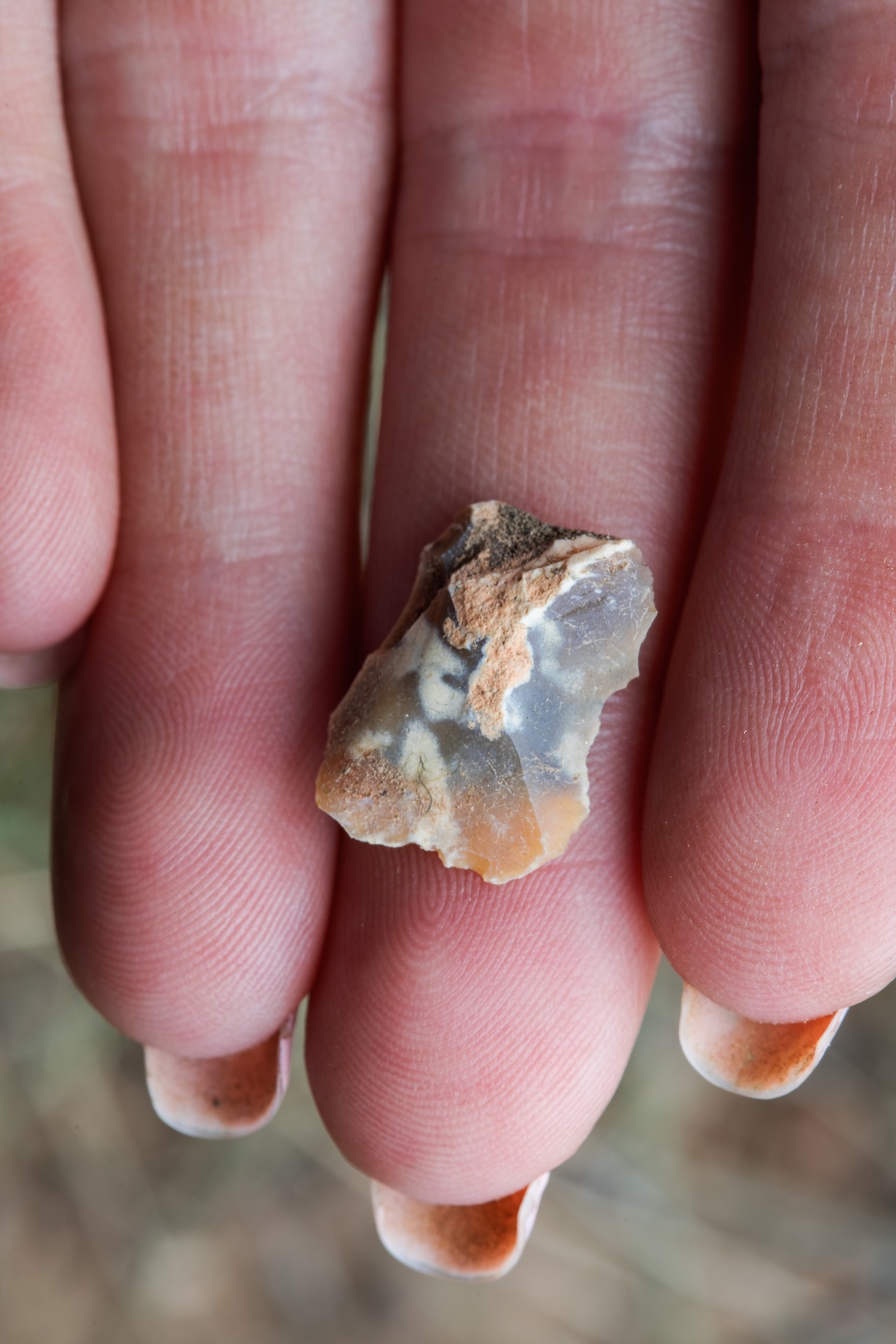
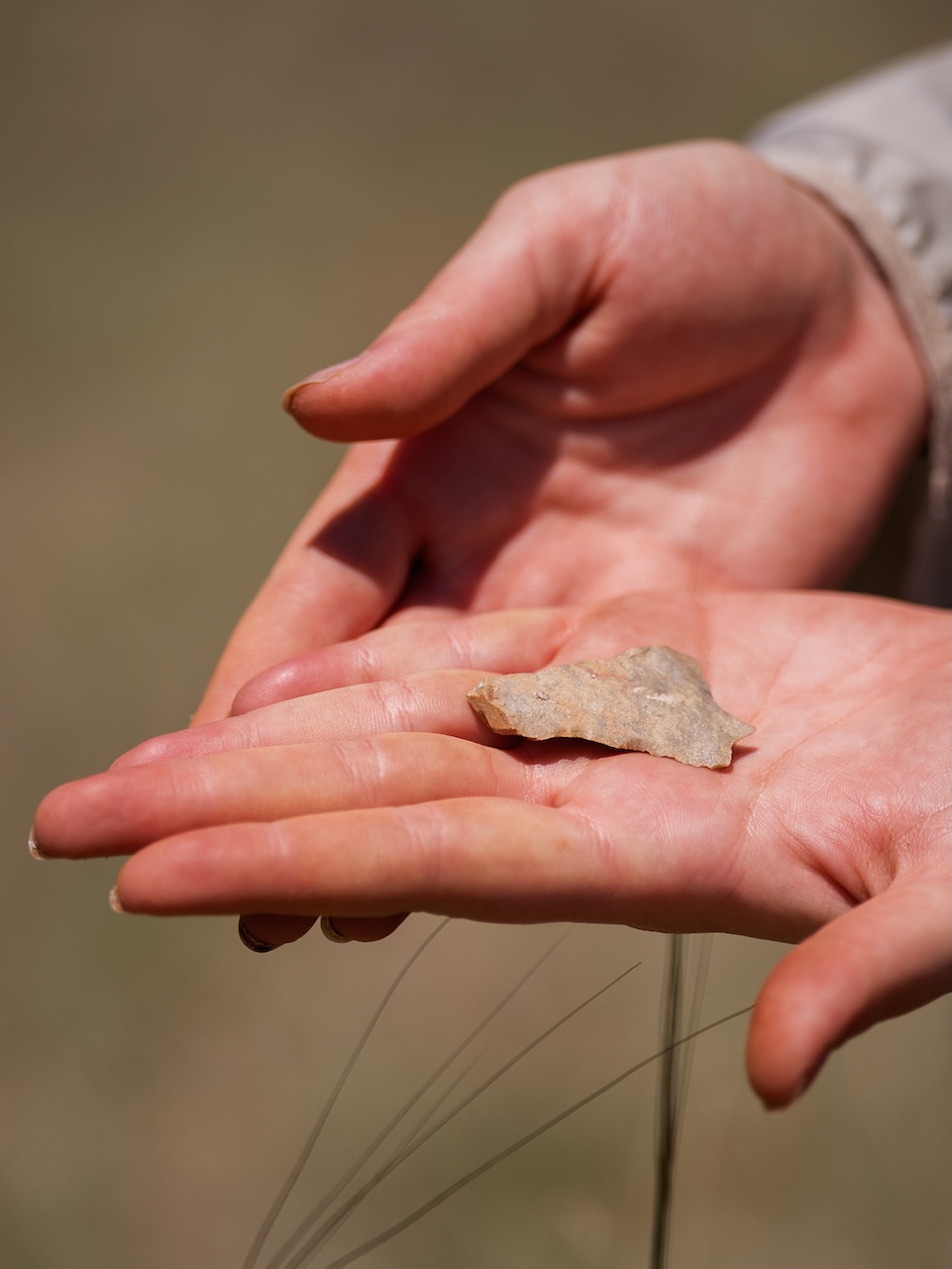
Students find a small stone flake from flint knapping (left) and a broken piece of quartzite that was commonly used to make tools such as scrapers and projectile points (right).
Students find a small stone flake from flint knapping (top) and a broken piece of quartzite that was commonly used to make tools such as scrapers and projectile points (bottom).
It is in this Northern Colorado setting – and through LaBelle’s unmatched expertise – that students in CSU’s Archaeology Field School learn their discipline while uncovering secrets about life in the region. Holding artifacts, such as a stone point shaped for a bison hunt or a piece of a ceramic pot used to carry water, provides a direct and powerful connection to the past. By examining bone fragments, tools, and even charcoal ash, students learn everything from the hunting and cooking practices of hunter-gatherers in the last Ice Age to the travels of settlers during the 1800s.
Last summer, students worked at four sites on private ranches between Wellington and Livermore north of Fort Collins. All the sites are in the interface of foothills and grasslands.
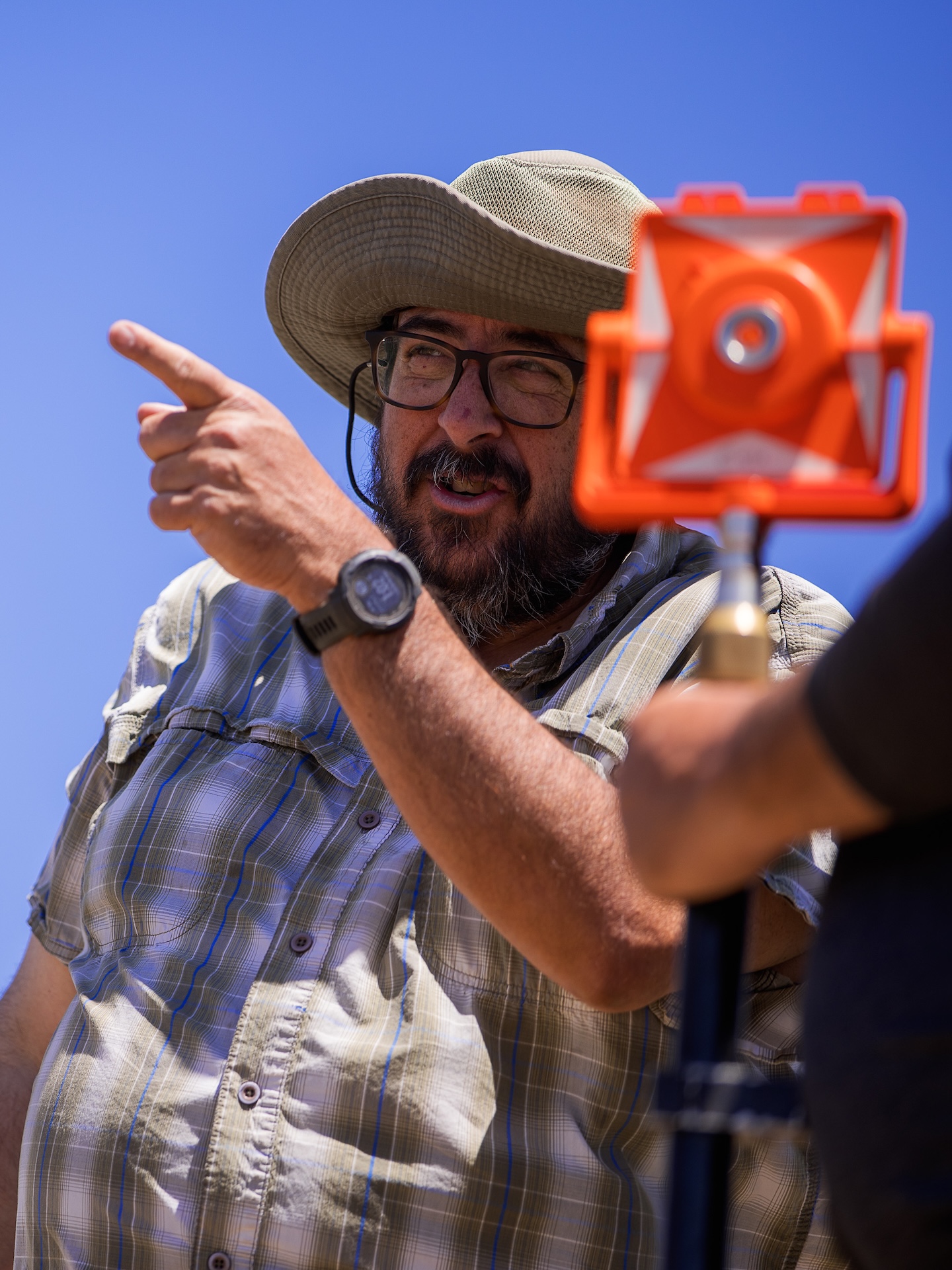
“They come back to campus as better students – engaged, excited, and with a deeper understanding of their course work.”
— Jason LaBelle, professor, CSU Department of Anthropology and Geography
As he designs sessions, LaBelle considers the knowledge and abilities students need as practicing archaeologists, whether working at a research university, for a cultural resource management company, or as a museum curator. He has a personal connection that helps make the field school his favorite teaching assignment: LaBelle attended the school as a CSU student in the early 1990s, an experience that shaped his career.
“There’s only so much students can learn from books and lectures,” he said. “Field school gives them the opportunity to experience archaeology firsthand, from surveys and shovel testing to excavations. They come back to campus as better students – engaged, excited, and with a deeper understanding of their course work.”
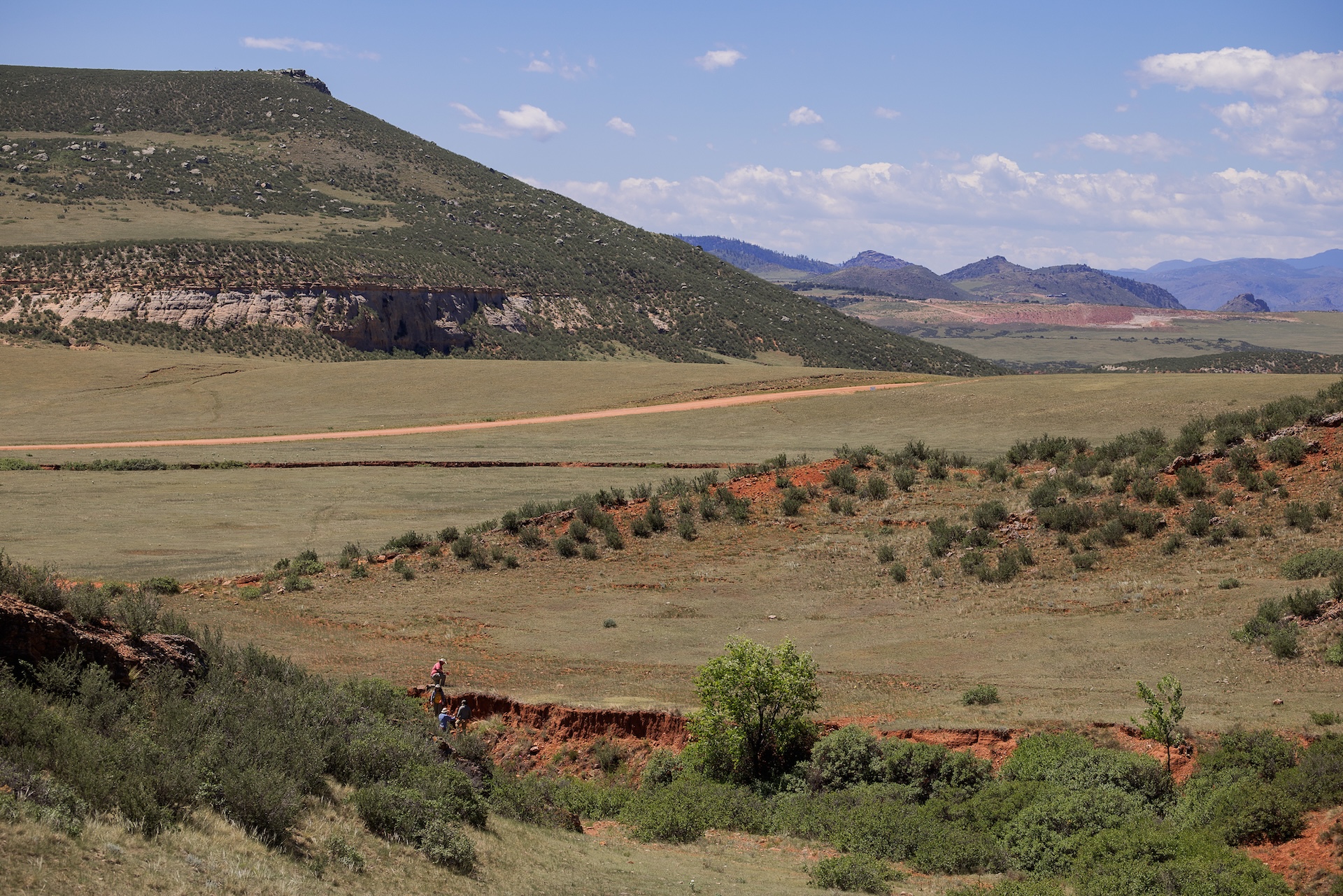
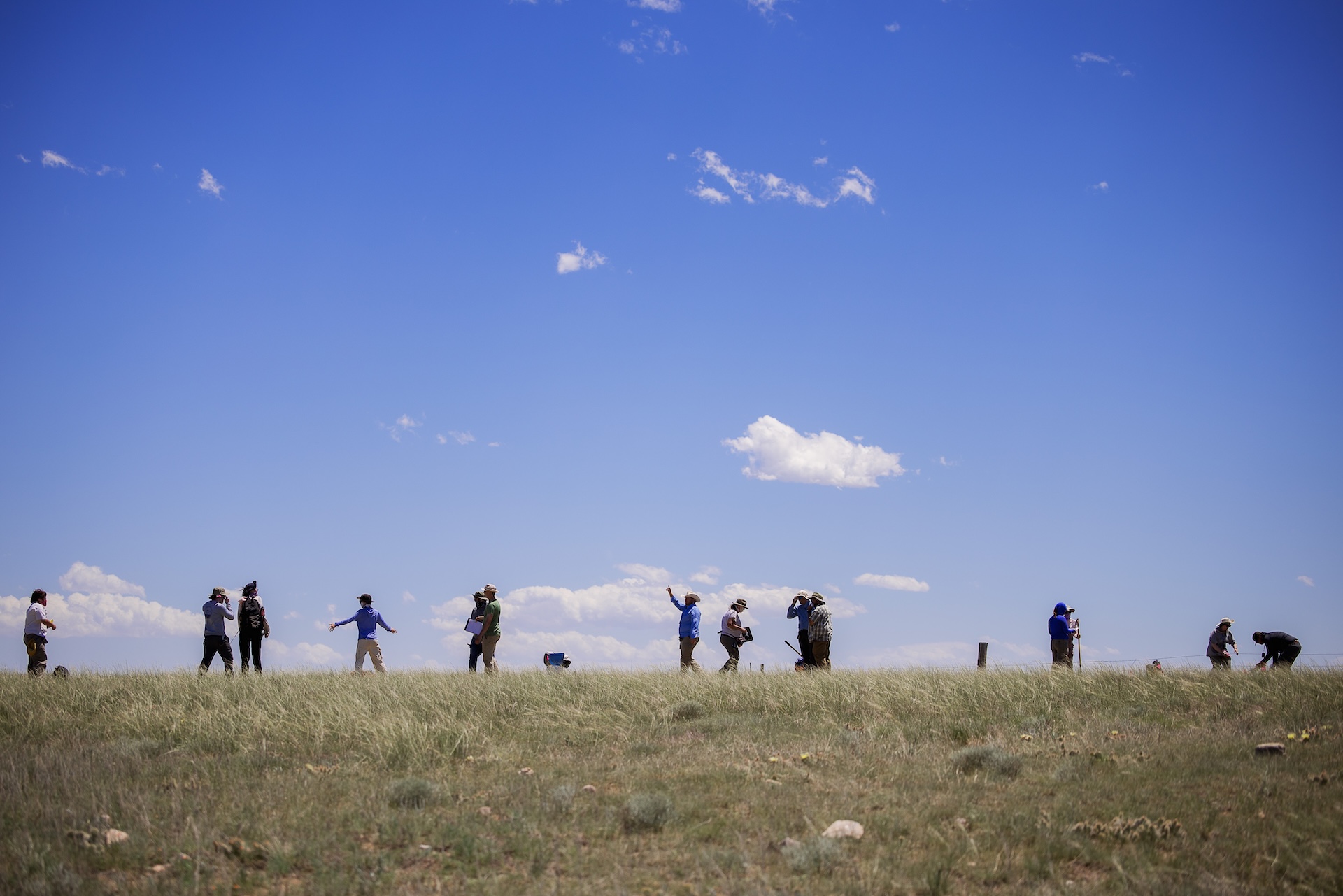
Left: Students examine a cutbank for evidence of artifacts. Right: Students lay out a grid to start sub-surface testing.
Top: Students examine a cutbank for evidence of artifacts. Bottom: Students lay out a grid to start sub-surface testing.
The school’s first week is spent in the classroom introducing students to the methodology and materials they will use in the field. After that, students spend six weeks conducting surveys, shovel tests, and excavations.
Much of the learning centers on methodology: mapping, surveying in varied terrain and weather, digging and sifting through test pits, and analyzing materials in the field and in the lab. As wind whipped over an upland terrace north of Wellington, doctoral student Cliff White let undergraduates in his group loose with GPS units to document the location not of precious artifacts or bones but of washers – the kind used in construction with screws and nuts. It might have seemed like an odd game of hide-and-seek, but White said 96 washers had been placed in specific spots to mimic a real excavation site. The exercise demanded that students sharpen their eyes and minds for surveying.
“Dr. LaBelle is known for really setting up his students for success,” White said. “This goes beyond finding where the artifacts are, but what does it mean when we see these types of distributions. Is it a campsite? Is it a workshop? Is it kill site?”
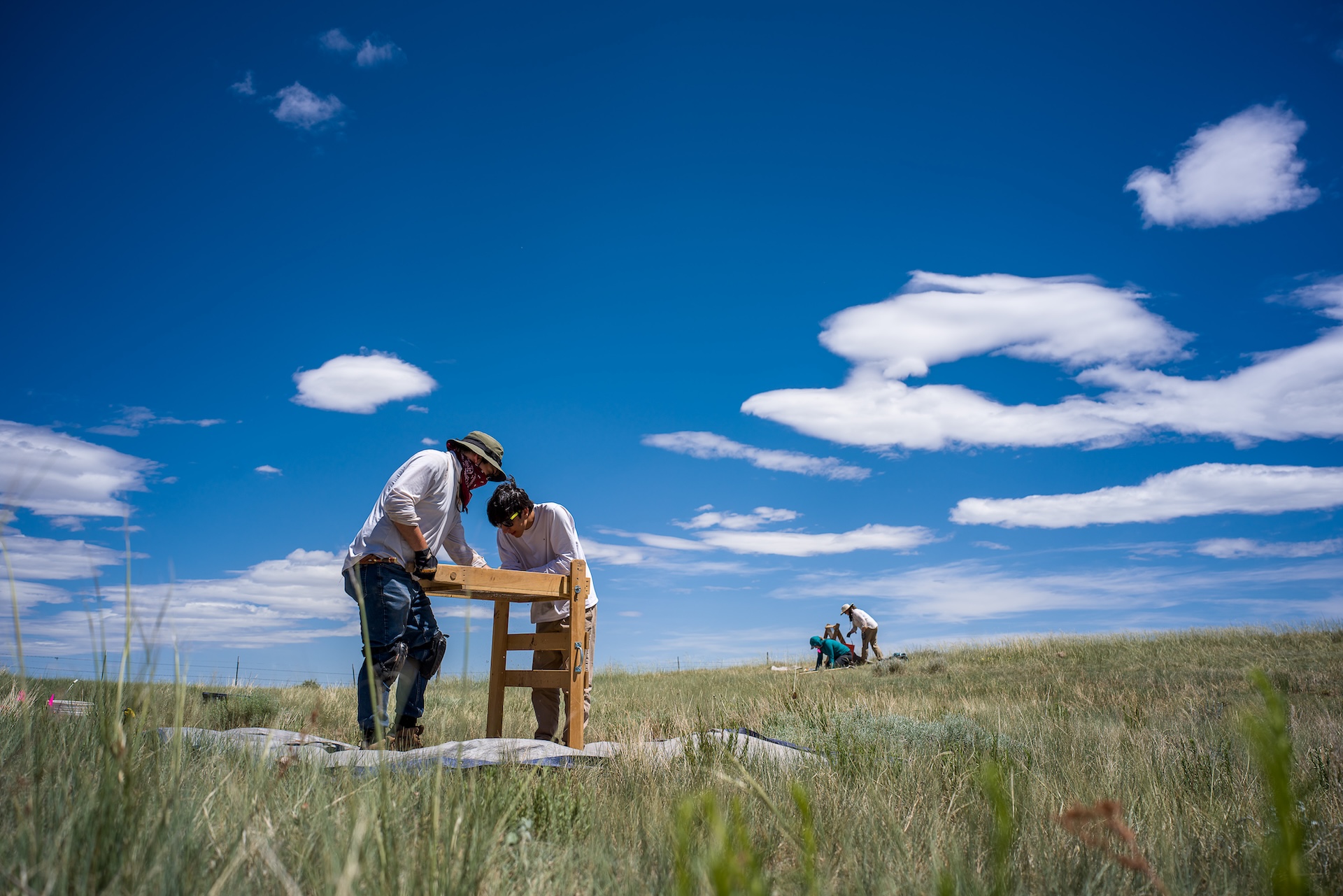
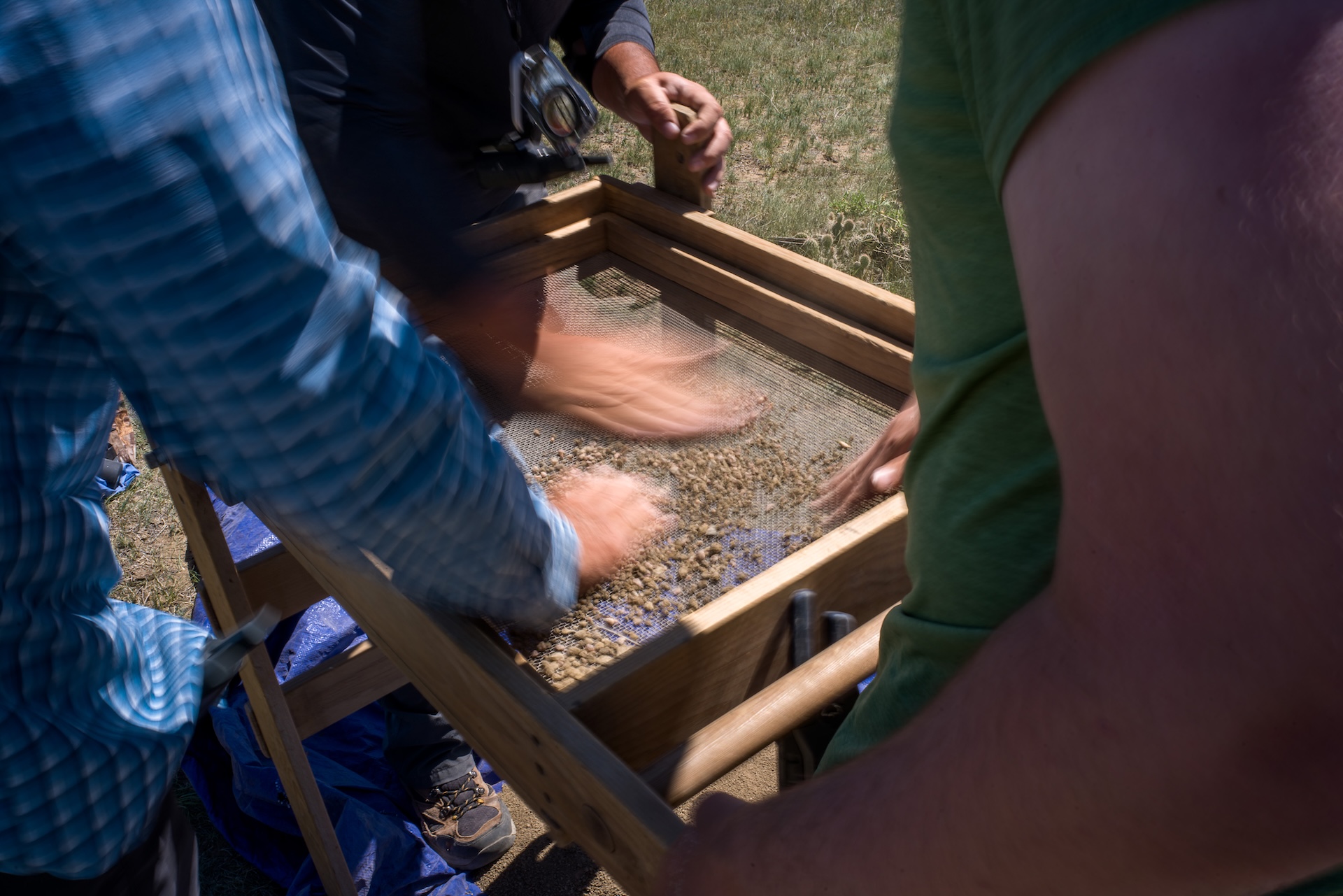
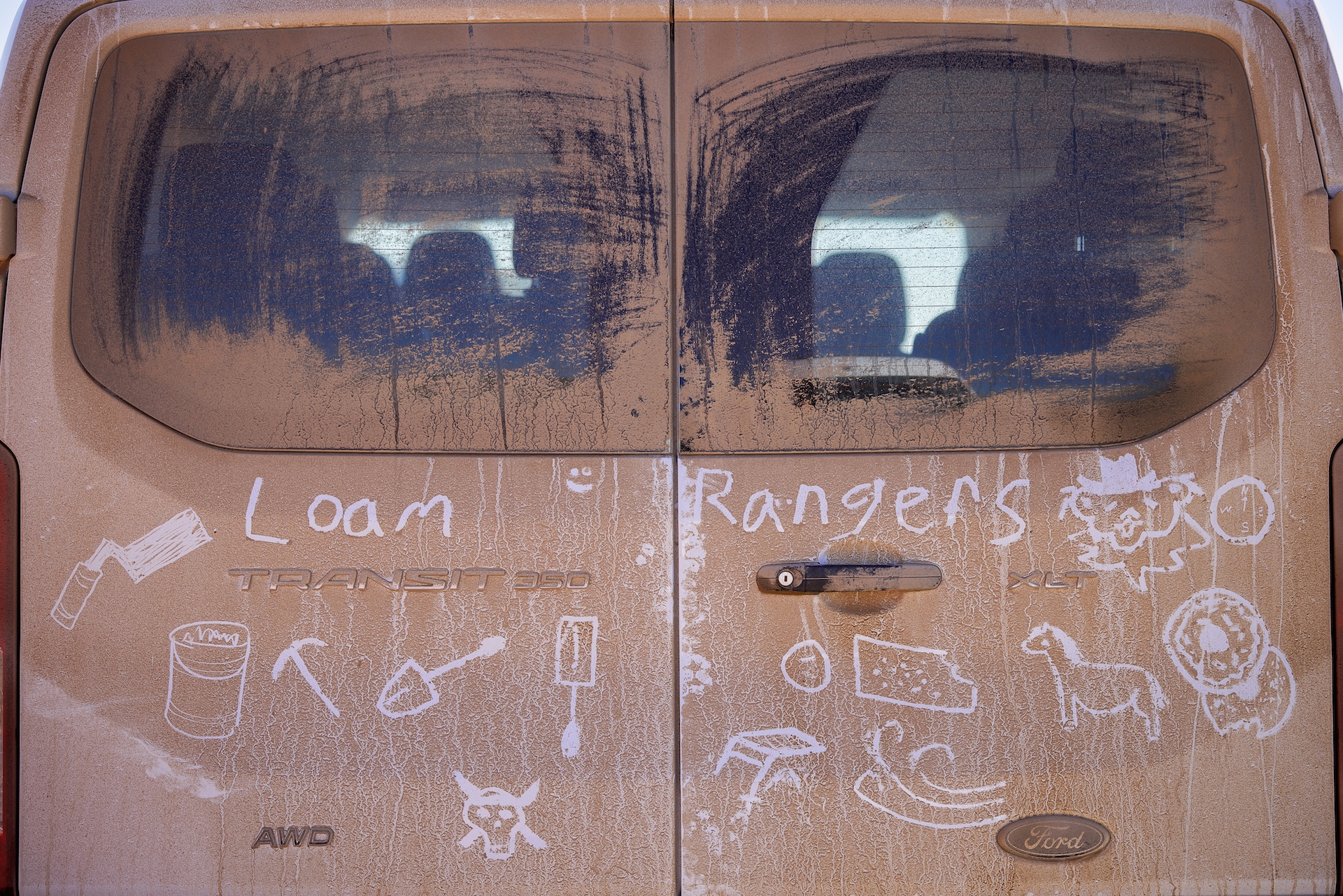
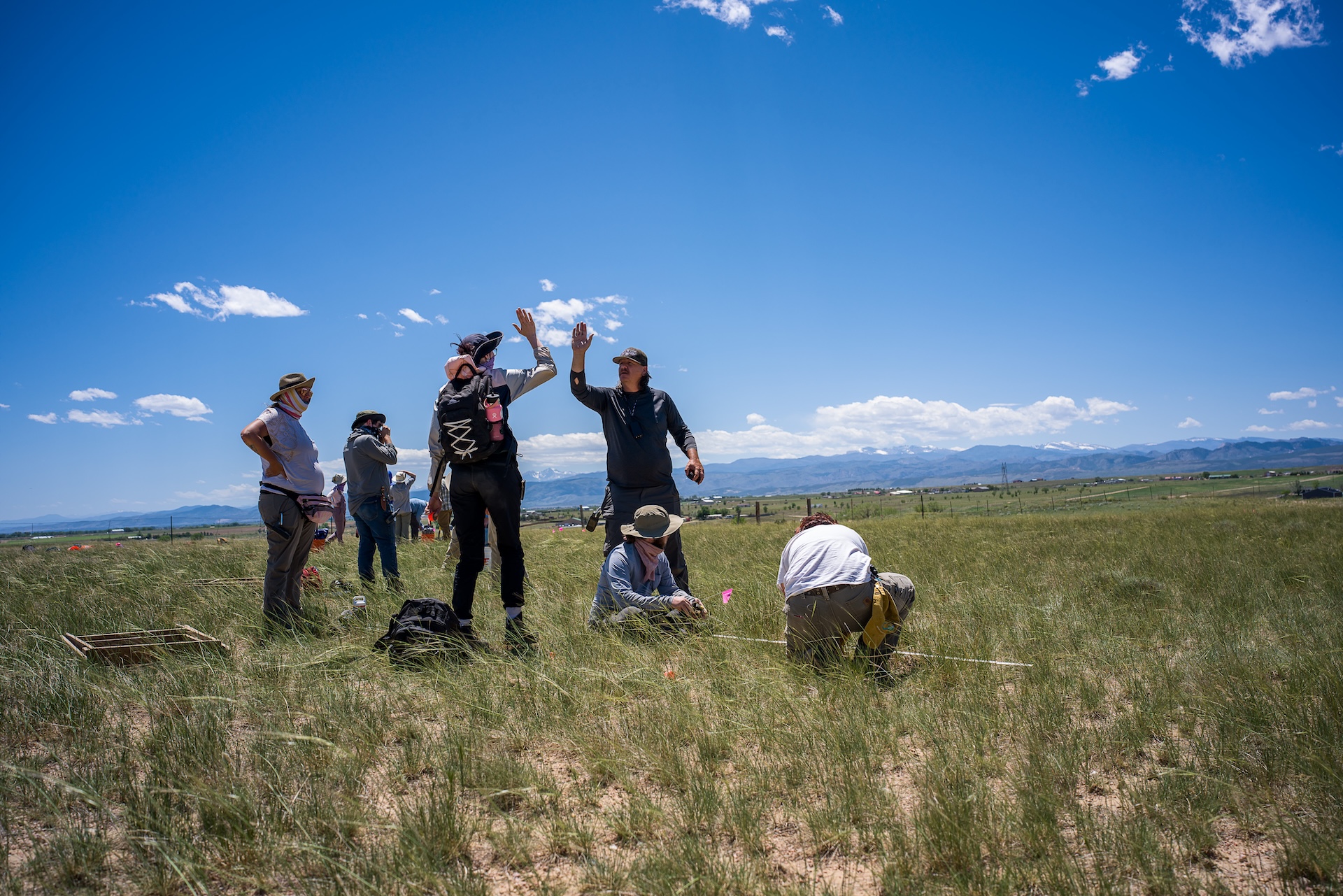
Clockwise from top left: Students Will Turnbull, left, and Jimmy Hammond screen soil from a test unit; students decorate their dirty van with icons from their summer experience; Hailey Conmay and Cliff White high-five after a long day; students screen sediment looking for artifacts.
From top to bottom: Students Will Turnbull, left, and Jimmy Hammond screen soil from a test unit; students screen sediment looking for artifacts; students decorate their dirty van with icons from their summer experience; Hailey Conmay and Cliff White high-five after a long day.
There and at three other sites, students searched for ancient artifacts, dating back thousands of years, and for historical remains, including evidence of homesteads from about 150 years ago. At another location, known as Kinney Spring, where Camarillo spotted the possible firepit, students in the 1980s uncovered a 1,000-year-old house. Under the leadership of former Professor Elizabeth Ann Morris, they discovered hearths, broken pottery, shell beads, animal bones, and stone tools.
“This area has been called the training ground because the sites here are so dense and rich,” explained LaBelle, pointing to spring water and a rocky ridge that was likely a source of stone for tools. “For people living off the land, it’s got everything you need. There’s no reason to leave. That’s why the sites are so interesting around here; people stayed a long time.”
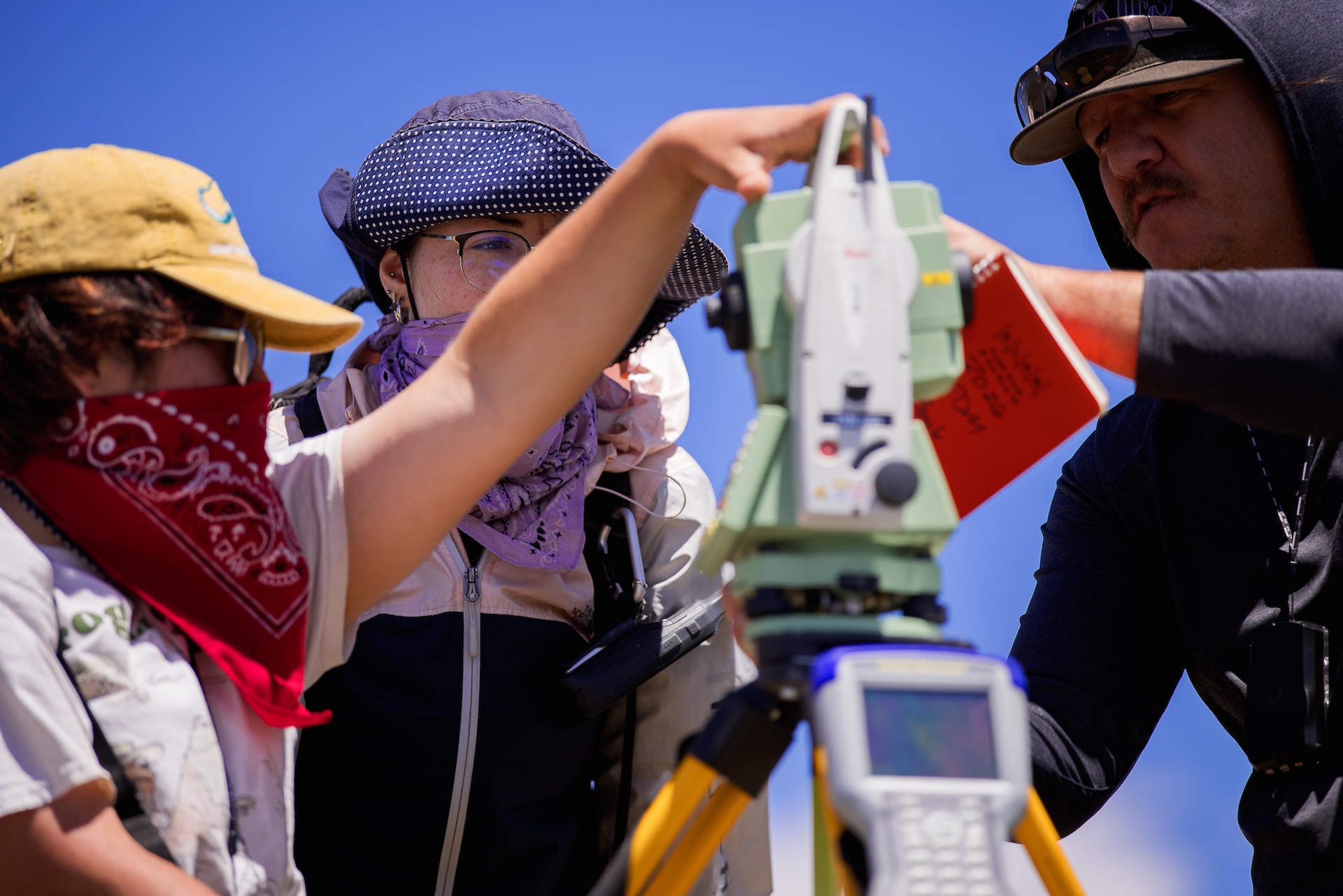
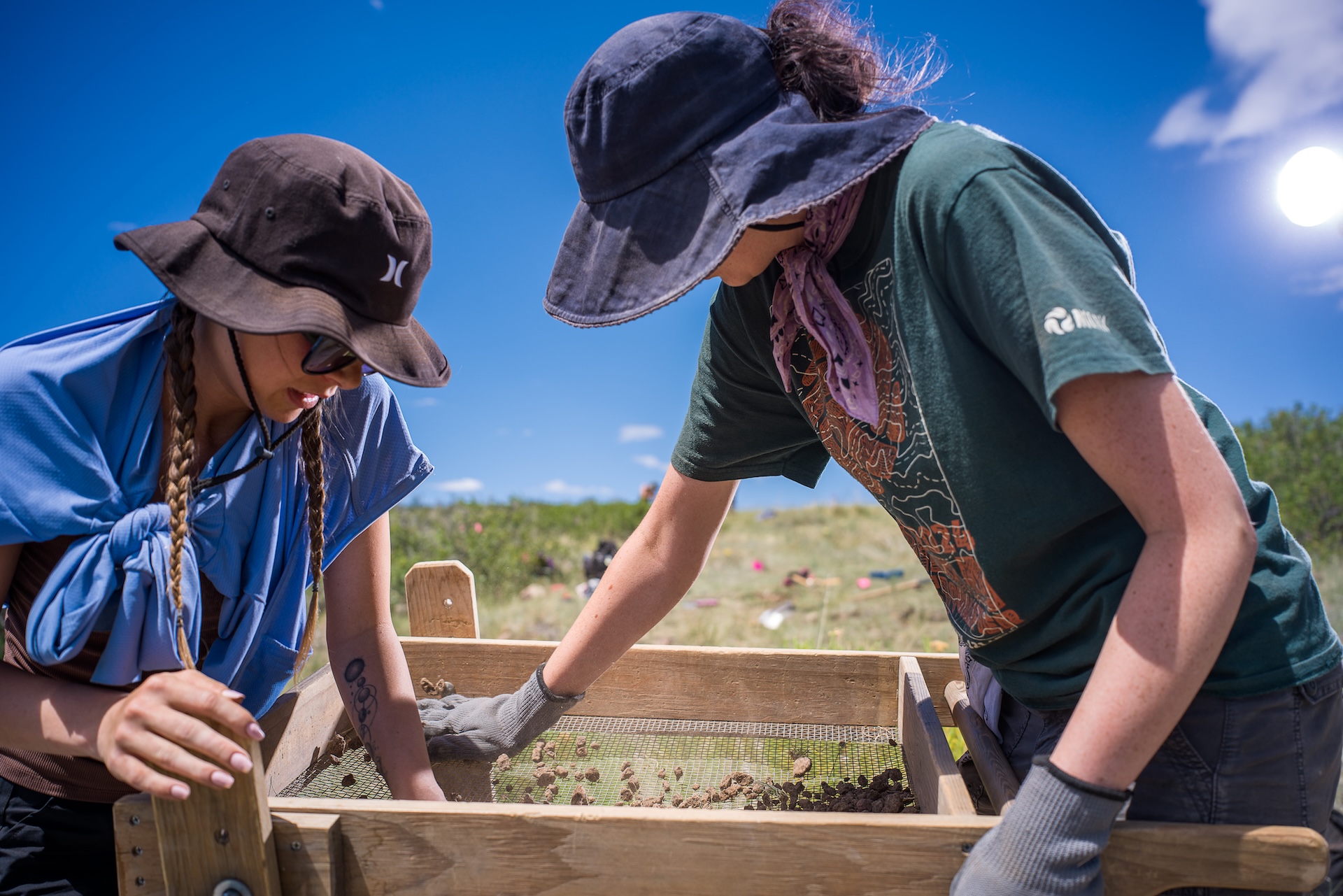
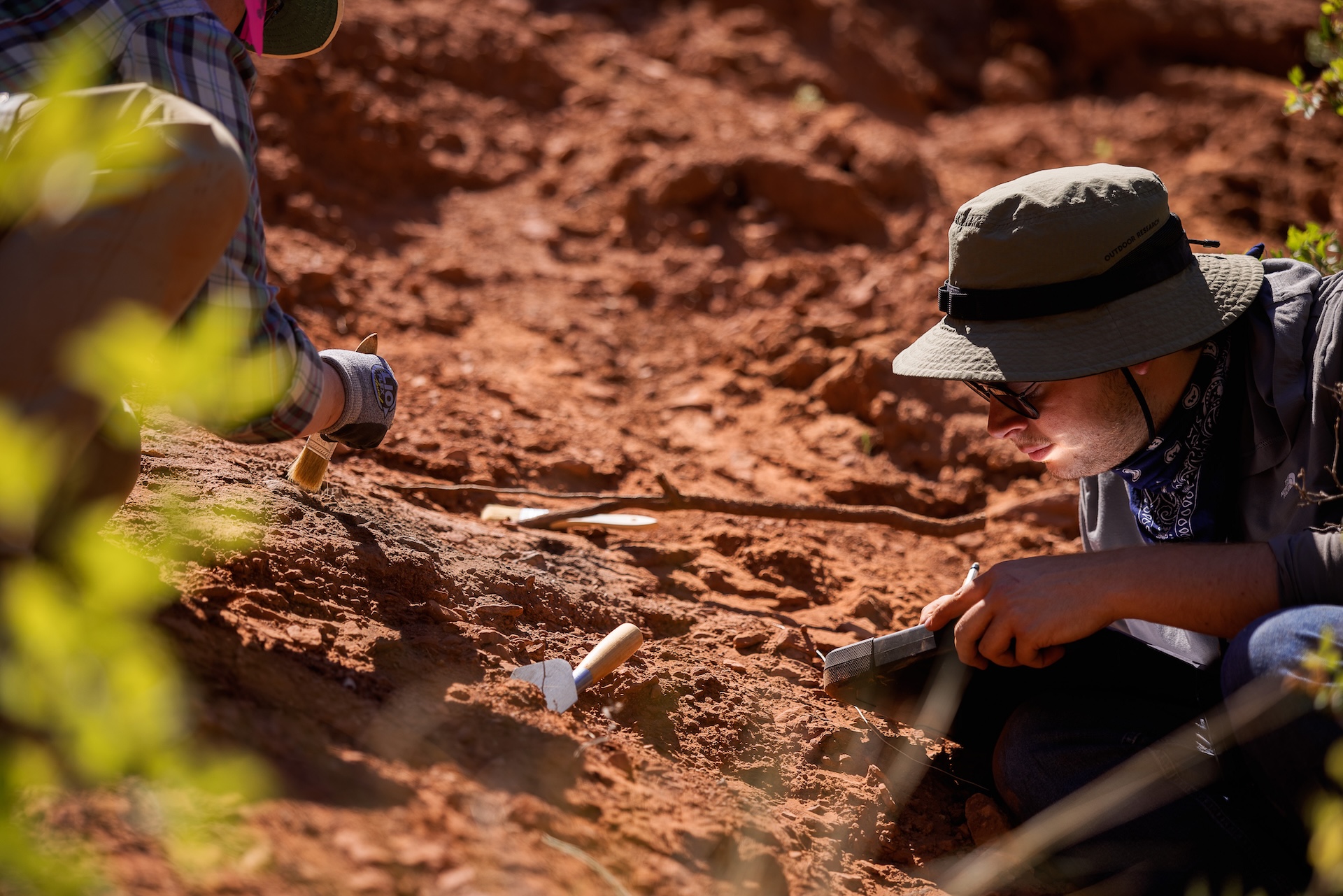
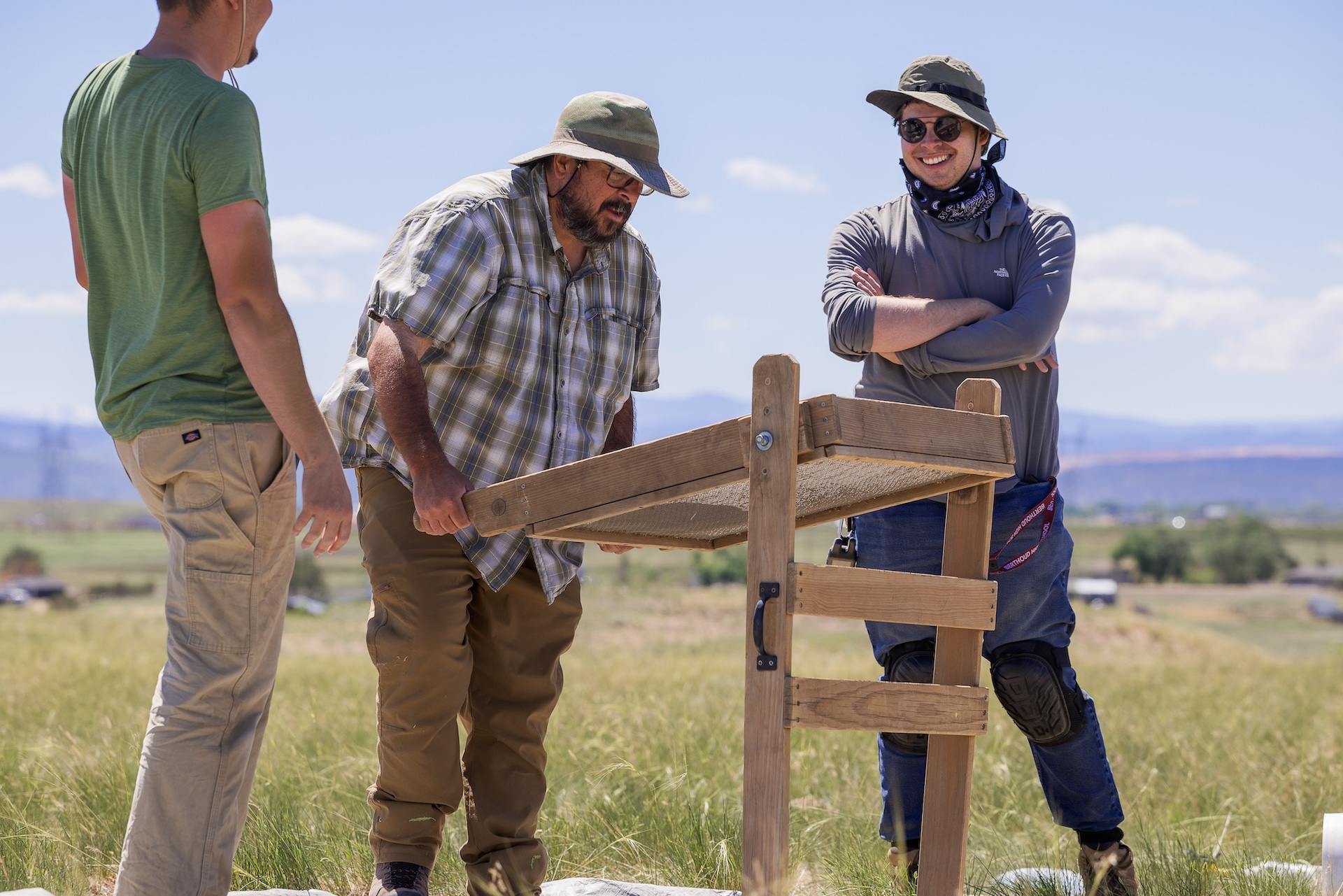
Clockwise from top left: Casandro Camarillo, left, Hailey Conmay, and Cliff White, a graduate teaching assistant, use site-mapping equipment; Will Turnbull takes notes to catalog a burned deposit; Professor LaBelle shows students Gabe Krumholz and Will Turnbull how to flip rock out of a screen; Jayda May and Hailey Conmay screen sediment from a test unit.
From top to bottom: Casandro Camarillo, left, Hailey Conmay, and Cliff White, a graduate teaching assistant, use site-mapping equipment; Jayda May and Hailey Conmay screen sediment from a test unit; Will Turnbull takes notes to catalog a burned deposit; Professor LaBelle shows students Gabe Krumholz and Will Turnbull how to flip rock out of a screen.
Students analyze findings to learn about the practices of earlier peoples. Even a tiny bit of ash can reveal critical information. “Not only can we date it, but we can determine what kind of wood it came from,” LaBelle said. “Was it local or brought from far away? What plants were they using, and how were they processing food?”
Field school research has advanced archeological knowledge, he said. For instance, students have contributed to farming chronologies for the ancient Fremont cultures of northwestern Colorado. With Professor Lawrence Todd, they have examined hunting that occurred nearly 3,000 years ago at the Kaplan-Hoover Bison Kill Site near Windsor. At Roberts Ranch, a cattle ranch in Livermore north of Fort Collins, they have excavated 1,000-year-old houses and a buffalo jump, where Native people drove bison over a cliff as a hunting practice. Students have drawn new conclusions about life in 1800s-era Western mining towns through research at a former red-light district in Ouray, a project led by Professor Mary Van Buren. They have surveyed the Fort Vasquez trading post in Platteville with archaeologist Jim Judge. And when the COVID-19 pandemic ended plans for an out-of-state trip, archaeology students, led by faculty members Van Buren and Ed Henry, surveyed the location of a claim shack from CSU’s first days. Last summer, they discovered a 10,000-year-old bison bone from a kill site in Yuma County, on the Eastern Plains.
Many of the school’s teaching locations remain the same from year to year, yet what is unearthed changes, often depending on weather-related erosion. At the Kinney Spring site, for example, cutbanks have developed over decades and now expose sediments about 7,000 years old, LaBelle said. “In these stratified deposits, we have thousands of years of cultural occupations exposed,” he said. “After each major storm, new artifacts are revealed, and we document them before they erode out of context.”
“It’s crazy how far we’ve come in just a week and a half. Now we can identify stone flakes, tools, and materials. As soon as one of us found the first flake, it was like all the light bulbs came on.”
— Joelle Dahlke, student, Archaeology Field School
During their work, students Savannah Humphrey and Joelle Dahlke sifted through shovels full of dirt from a test pit excavated just 10 centimeters at a time. They kept an eye out for anything unusual. “Once you finally see what you’re looking for, you can’t unsee it,” Dahlke said. “It’s crazy how far we’ve come in just a week and a half. Now we can identify stone flakes, tools, and materials. As soon as one of us found the first flake, it was like all the light bulbs came on.”
For Humphrey, the effort confirmed that archaeology isn’t just her passion but her career path. “You don’t want to graduate, go into the field, and then find out this isn’t for you,” said Humphrey, who dreams of starting her own cultural resource management firm.
Being sunburned and covered in dirt are badges the students wear with pride, she said. The same goes for run-ins with wildlife; ticks, rattlesnakes, and startled deer are all part of the package. “I mean, if you sign up for this, you want to do this,” Humphrey said.
“It seems so many archaeological sites in Colorado have Dr. LaBelle’s name attached to them.”
— James Kovats, owner, field school site
In the 1970s, federal laws mandated that public lands be surveyed for cultural resources before industrial, commercial, and extractive activities. To help fill these mandates, Calvin Jennings, a CSU professor emeritus of archaeology, started the university’s Laboratory of Public Archaeology. Much of its collection is now stored in CSU’s Archaeological Repository, which LaBelle curates. About 25 percent of the repository has come from Archaeology Field School excavations; artifacts span from 100 to 18,000 years old, with most from the last 3,000 years.
Yet today, most artifacts remain where they are found to maintain their context in history, LaBelle said. A pottery sherd or bit of ash gives students enough material for laboratory testing without removing a complete item from a site. “For the most part, we leave everything where it was,” LaBelle said. “That way we can come back and see it in the future.”
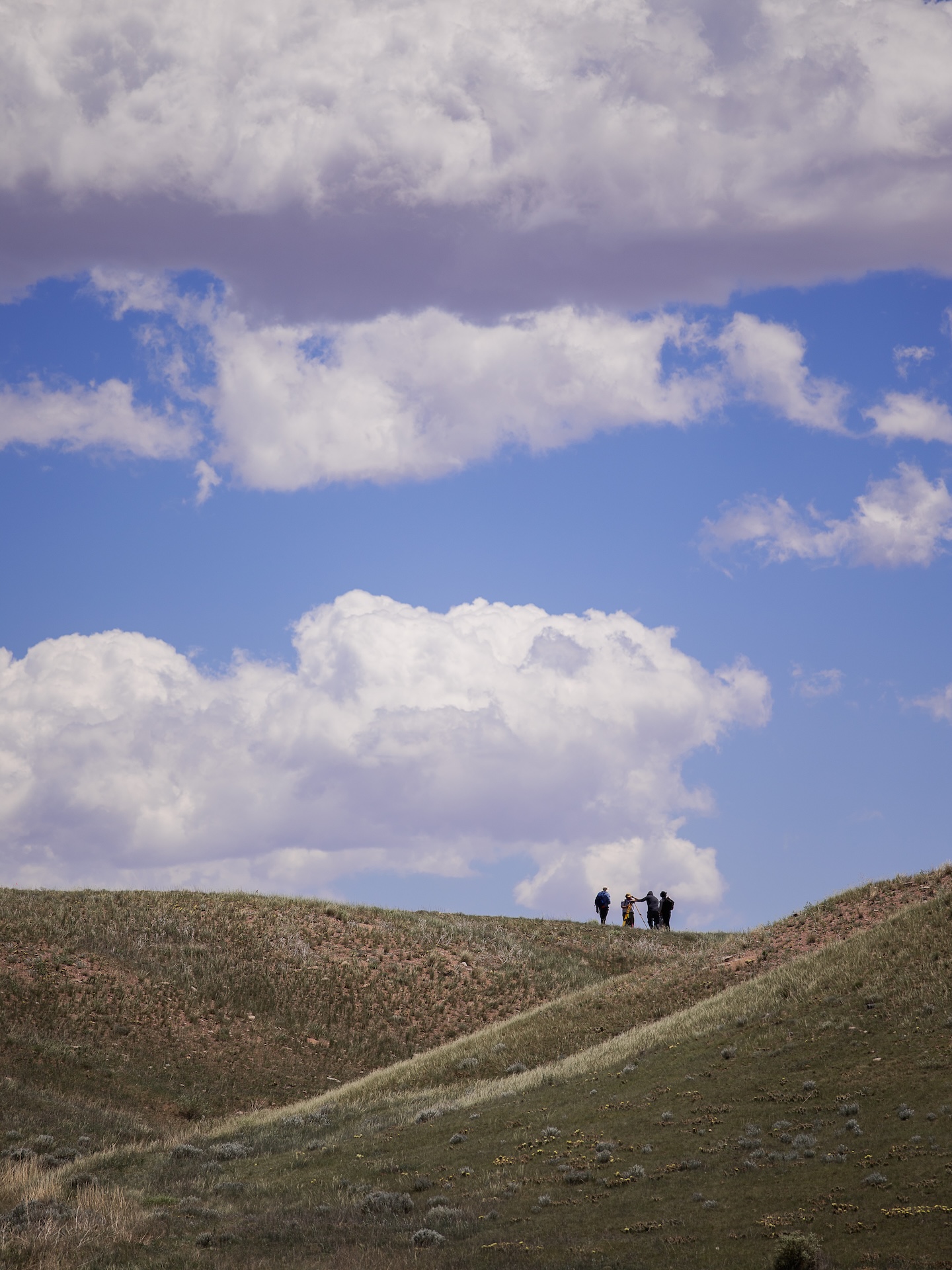
Students map a site along a creek north of Fort Collins.
This was a key reason landowners James and Kelli Kovats invited field school students onto their Wellington property. During James Kovats’ daily walks, the self-described amateur archaeologist has found a few spear points and arrowheads. He knew exactly whom to contact for scientific survey of his property. “It seems so many archaeological sites in Colorado have Dr. LaBelle’s name attached to them,” Kovats said.
He was excited when LaBelle agreed – and even more excited to host students. Last summer, they dug and analyzed test pits, documented artifacts, and surveyed areas, often with their eyes trained on the ground.
“One of my main goals is that when this is all done, we’ll have a report that stays with the house forever,” Kovats said. “There will be somebody living here after me, and I would like them to also leave what’s found in place and documented for the future and know and appreciate the history of this place.”
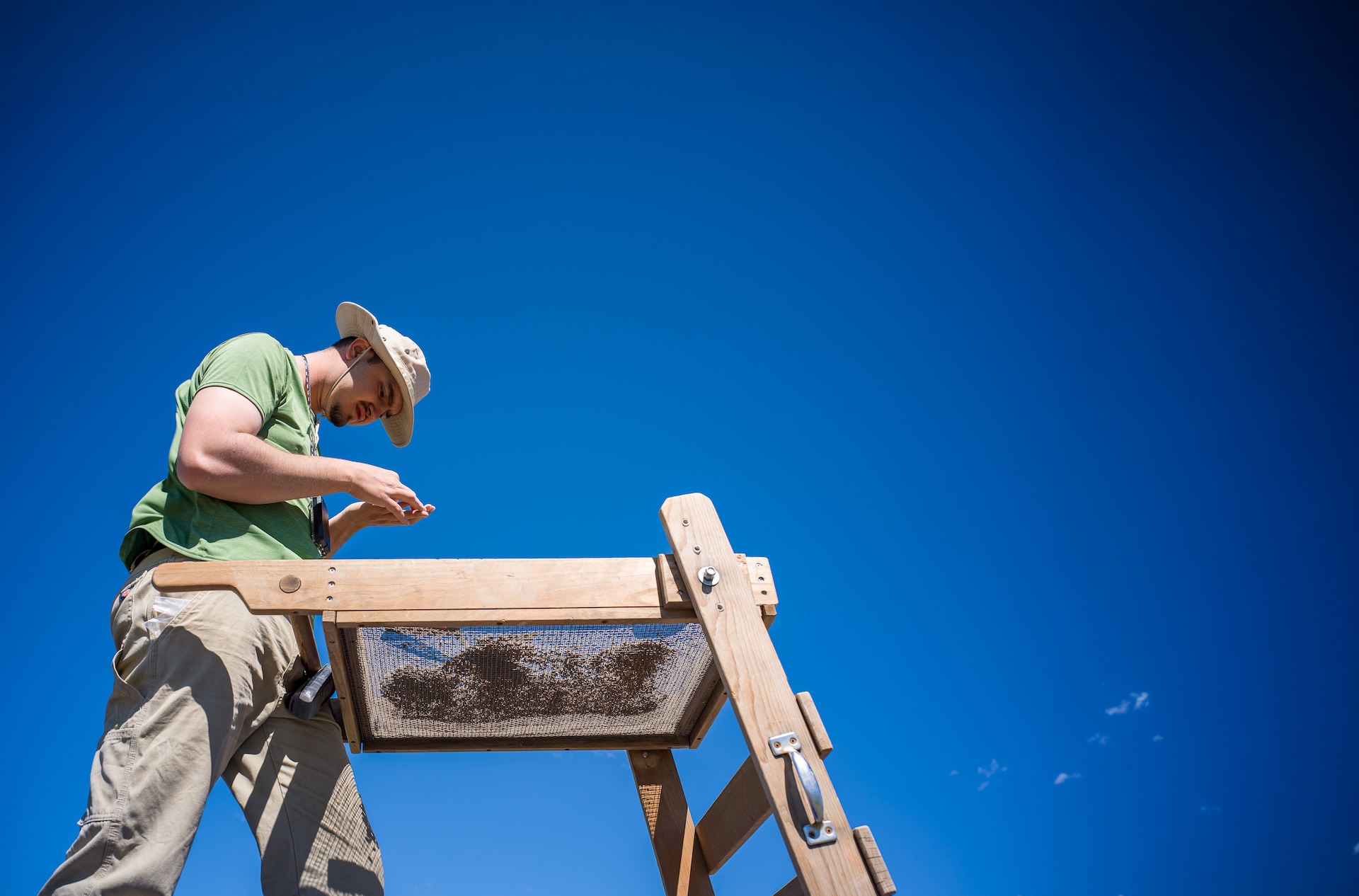
Photo at top: Gabe Krumholz, a CSU student majoring in anthropology, sifts sediment from a test pit through a mesh screen to look for fragments of artifacts such as stone tools and pottery. He was a participant in CSU’s Archaeology Field School, in the Department of Anthropology and Geography, within the College of Liberal Arts.
SHARE